
Alabama Parole Board Records
The Alabama Board of Pardons and Paroles is the three-member body that votes on parole matters. The Alabama Bureau of Pardons and Paroles, or ABPP, operates the statewide website, docket functions, public information channels, and field supervision system. The Board's role is not the same as ADOC's. The Board decides whether parole should be granted under Alabama law. ADOC holds and releases state prisoners, while ABPP verifies an approved home plan and coordinates the post-grant process.
The hearing record sits between the sentence and possible release. A scheduled entry shows that Board consideration is planned. A result shows the vote or procedural outcome. Hearing minutes may supply special conditions. None of those records alone proves the person left a prison. The custody-exit record and later supervision file answer those separate questions. This division of responsibility is vital when the goal is to distinguish a coming hearing, a grant, a physical release, and eventual discharge.
The official ADOC home page is the source shown below for the custody agency that carries out prison release after Board action.
A person can therefore have a granted result while remaining in ADOC custody. That is not a contradiction. It means the Board decision and physical release are separate events handled through connected agencies.
Find Alabama Parole Hearing Dates
The useful public calendar is ABPP's rolling Scheduled Parole Hearings table. It lists hearing date, last and first name, AIS, a medical indicator, and the county or counties of conviction. The Bureau says hearings generally occur weekly from Tuesday through Thursday unless otherwise noted. Dates can change. ABPP does not promise a fixed day each week when every new docket will appear, so the table should be checked again near the expected hearing.
An AIS is especially useful because names can match or change in form. Conviction county supplies another cross-check. The schedule is not a current prison roster and does not state that release will follow. It documents planned Board consideration based on the Bureau's current docket.
- Open the official ABPP Scheduled Parole Hearings table rather than the generic calendar page.
- Search or scan for the last name, then confirm the first name.
- Match the AIS when one is known and compare the conviction county.
- Record the listed hearing date and recheck it because the rolling docket can change.
- After the hearing, move to current-year results and the minutes for that date.
The ABPP scheduled-hearings table is captured below.
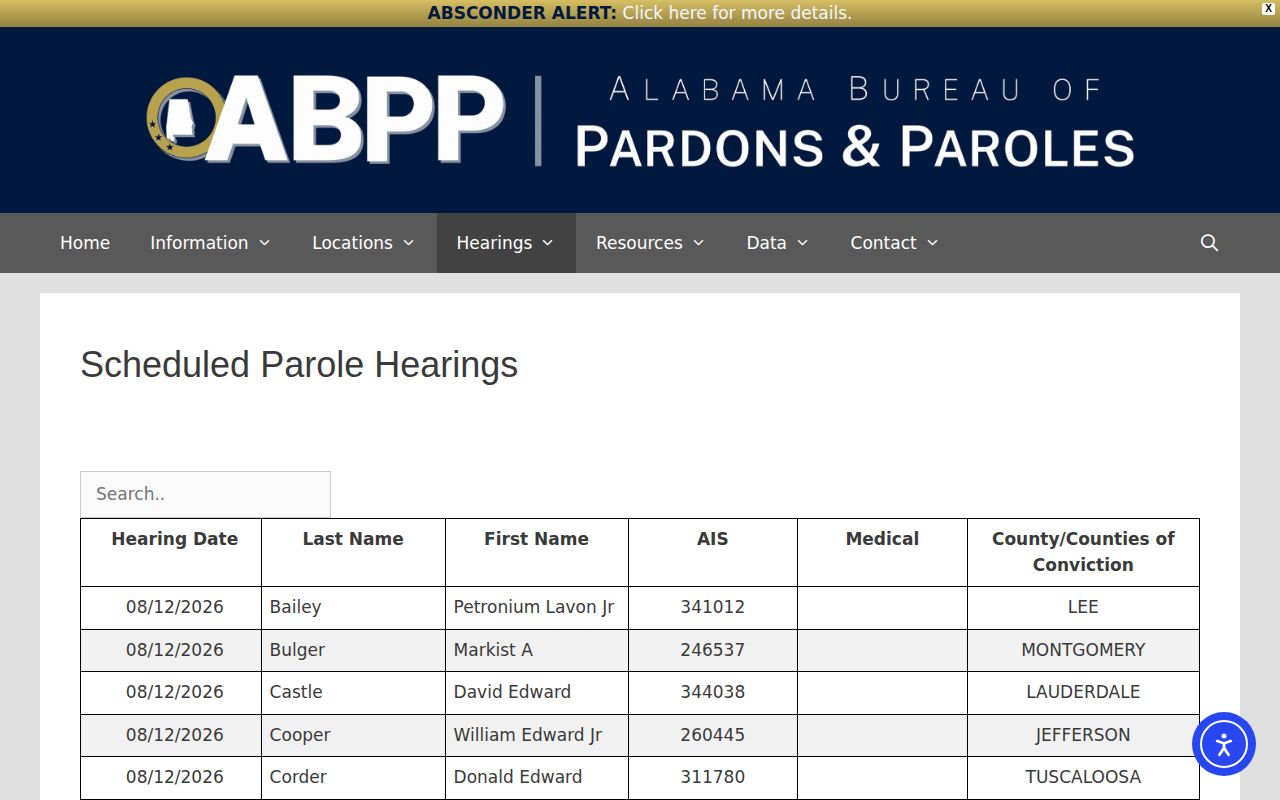
Note: A hearing date is a Board event, not an expected exit time from an ADOC facility.
Check Alabama Parole Decisions
After the meeting, use the sortable ABPP current-year results table. Its fields include hearing date, AIS, name, medical indicator, result, and conviction county. Older narrative outcomes remain available through the Bureau's hearing-results archive. When special conditions matter, open the dated hearing minutes because the main result row may not state them. Each source answers a narrow part of the record.
The result search should mirror the schedule check. Match the name, AIS, hearing date, and county. Do not rely on a name alone. Then read the exact result term. Granted, Denied, Denied/reset, and Continue are not interchangeable. If the current table does not cover the needed year, use the archive and dated minutes rather than assuming the record is missing.
- Open ABPP's current-year parole results and search for the person's name or AIS.
- Confirm the hearing date and conviction county against the scheduled entry.
- Read the complete result, including any reset month or continuation term.
- Open the minutes for that hearing date when special conditions or a fuller Board record are needed.
- Use the archive for an older result, then verify present custody or supervision through the responsible agency.
The official ABPP current-year results appear in this matched capture.
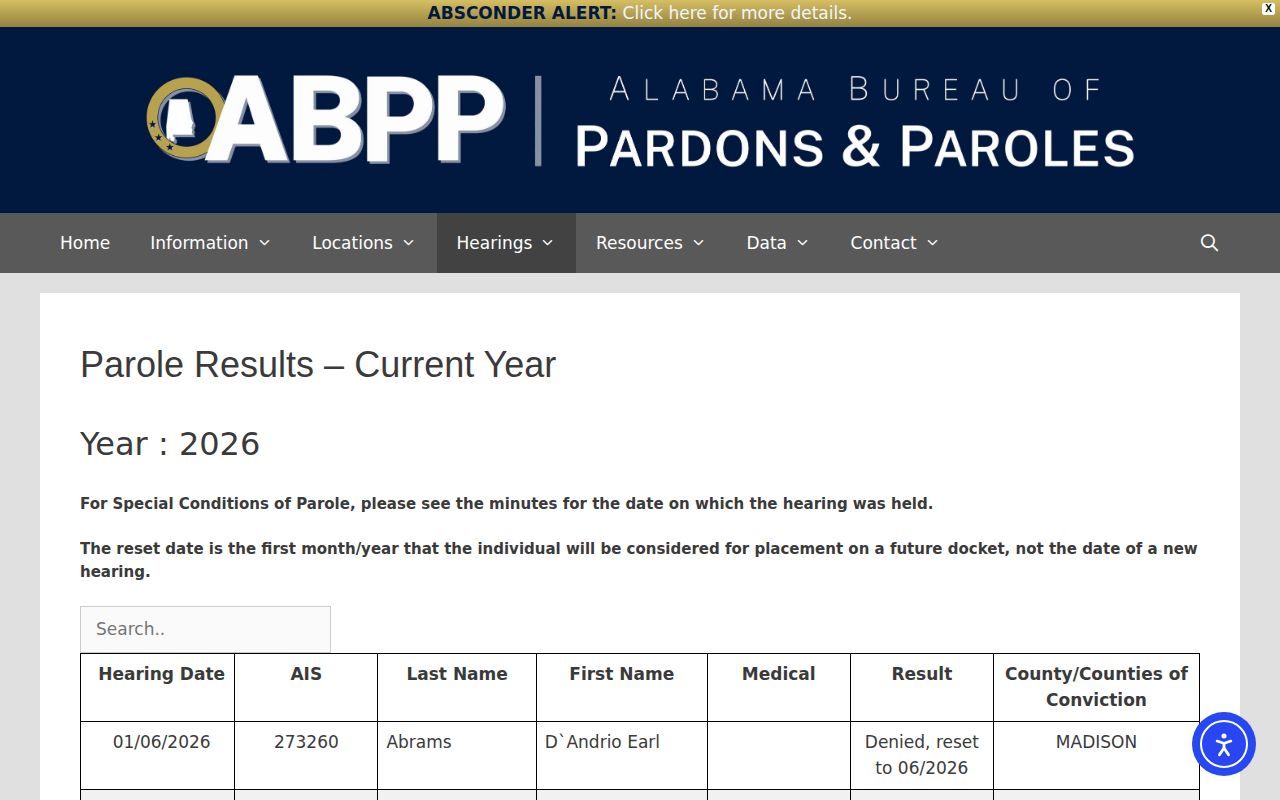
For a person who was granted parole but not yet released, ABPP's Public Information Unit handles questions about eligibility, consideration dates, results, and pending release. The Docket Unit calculates eligibility and handles parole certificates and releases.
Alabama Parole Hearing Outcomes
Result terms must be reported as ABPP publishes them. A grant supports the fact that the Board approved parole, subject to later processing. A denial means the Board did not approve parole at that hearing. Continue shows that a final decision was not completed in the ordinary way shown by a granted or denied row. A Denied/reset result supplies a future month when the person may be considered for docket placement, but it does not book a new hearing.
| ABPP outcome | What it establishes | What to check next |
|---|---|---|
| Granted | The Board approved parole. | Home-plan review, ADOC custody, release paperwork, and field-office status. |
| Denied | Parole was not approved at that hearing. | The result, minutes, and any future consideration information. |
| Denied/reset | The person may be considered for a later docket in the stated month. | A future schedule entry; do not infer a specific day. |
| Continue | The matter remains unresolved or moved forward procedurally. | Later results and the dated hearing minutes. |
The distinction is visible in ADOC's own statistics. Its April 2026 report counted 65 paroles granted separately from 102 parole releases and excluded grants from release totals. The two measures describe different events. A result page can prove the first event without proving the second.
Do not turn a denied result into an assumed next date either. The result must be read with any reset wording, then checked against a later schedule. A continued matter also calls for a later result or minutes. This record-by-record approach preserves what the Board actually published and avoids adding an outcome that does not appear in the official row.
Alabama Reset Is Not Scheduled
ABPP expressly warns that a result such as “Denied, reset to MM/YYYY” does not set the next hearing. The month and year mark when the person may be considered for placement on a future docket. A later scheduled-hearings entry is still needed before treating the matter as an appointment. This Alabama-specific rule prevents a reset month from turning into a promised hearing date.
Keep three records separate. The result table shows the denial and reset notation. The scheduled-hearings table shows whether a later date was actually placed on the docket. Hearing minutes can show special conditions or more detail tied to the Board meeting. If no later schedule entry appears, contact the Public Information Unit rather than projecting a day from the reset month.
A reset also is not a release estimate. Parole consideration concerns a Board decision. Alabama's Minimum Release Date is an ADOC date field, and actual release is another event. Neither should be derived from a reset entry. Saving the original result and checking each later official source produces a reliable timeline without assigning meaning ABPP did not publish.
Note: Record a reset as a future review window until ABPP posts an actual hearing date.
Alabama Parole Hearing Process
ABPP parole hearings are open public meetings at 301 South Ripley Street in Montgomery. The Bureau says waiting rooms open at 7:30 a.m. and the public meeting begins at 8:00 a.m. The inmate does not attend the parole hearing. Support speakers proceed first, victim or opposition speakers follow, and the Board then moves into executive session and votes. Weekly preview posts are collected in the Bureau's hearing-advancers archive.
Attendance rules explain why the hearing record does not resemble a trial docket. The Board is considering parole under its statutory standard, not deciding guilt or imposing the original sentence. The result and minutes document the Board proceeding. The prison record remains with ADOC. Court records remain useful for the sentence, offense, jail credit, amended orders, or other judicial facts that frame eligibility.
The Alabama Just One Look portal provides the court-side source shown below.
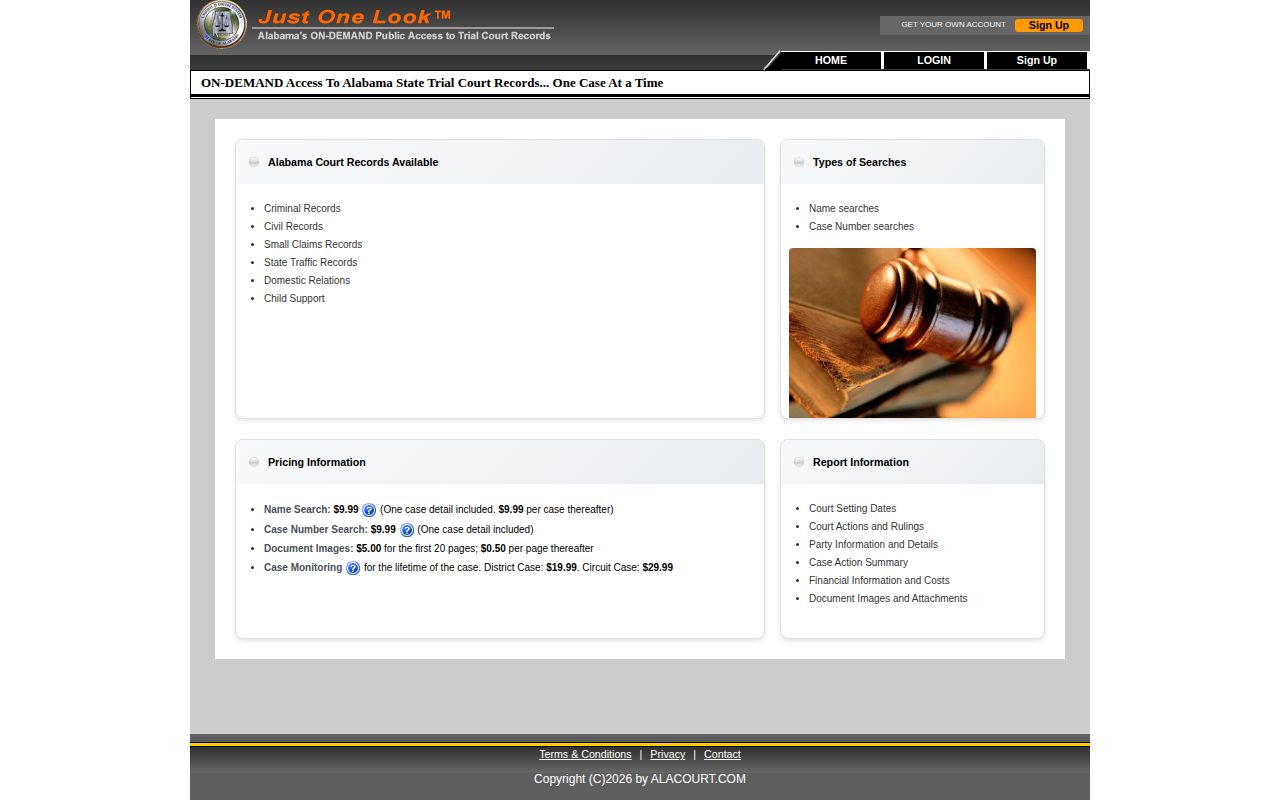
The most sound record chain is therefore court for the sentence, ABPP for the hearing and decision, ADOC for custody exit, and the field office for active supervision. One portal should not be asked to answer all four questions.
Alabama Parole Eligibility Rules
Ala. Code § 15-22-28 is the core eligibility and consideration statute. Section 15-22-26 supplies the release standard and states that parole is not a reward based only on good conduct. Alabama does not reduce all parole eligibility to one percentage. Sentence and offense, jail credit, statutory exclusions, institutional conduct, court orders, risk and needs, programming, and input allowed under law may affect review.
Some offenses and sentences have specific statutory bars. Section 15-22-27.3 addresses specified child-sex Class A and B cases. Section 15-22-27.2 addresses certain life sentences following a second Class A felony. Medical parole follows separate rules in § 15-22-43. The official code should be checked for the version in force on the relevant date because it flags amendments with later effective dates.
An eligibility or consideration date means the case can enter Board processing under the governing rules. It does not guarantee a hearing outcome. Likewise, a scheduled hearing does not guarantee a grant, and a grant does not guarantee an immediate release. Each stage must be verified from its own Alabama record.
Use the sentence and offense that appear in the official court and agency records. Jail credit, later court orders, and statutory changes can alter the path. A broad rule of thumb cannot replace the Docket Unit's calculation or the version of Alabama law that applies to the case.
Alabama Grant to Release
After a grant, ABPP verifies the approved home plan and coordinates with ADOC. The Bureau's FAQ says it cannot give an exact release date merely from the grant. Detainers, release documents, and other agency action may still affect the physical exit. The Public Information Unit routes questions about someone granted parole but not yet released, while the Docket Unit handles parole certificates and release functions.
The ABPP field-office directory is the official post-grant routing source in the matched image below.
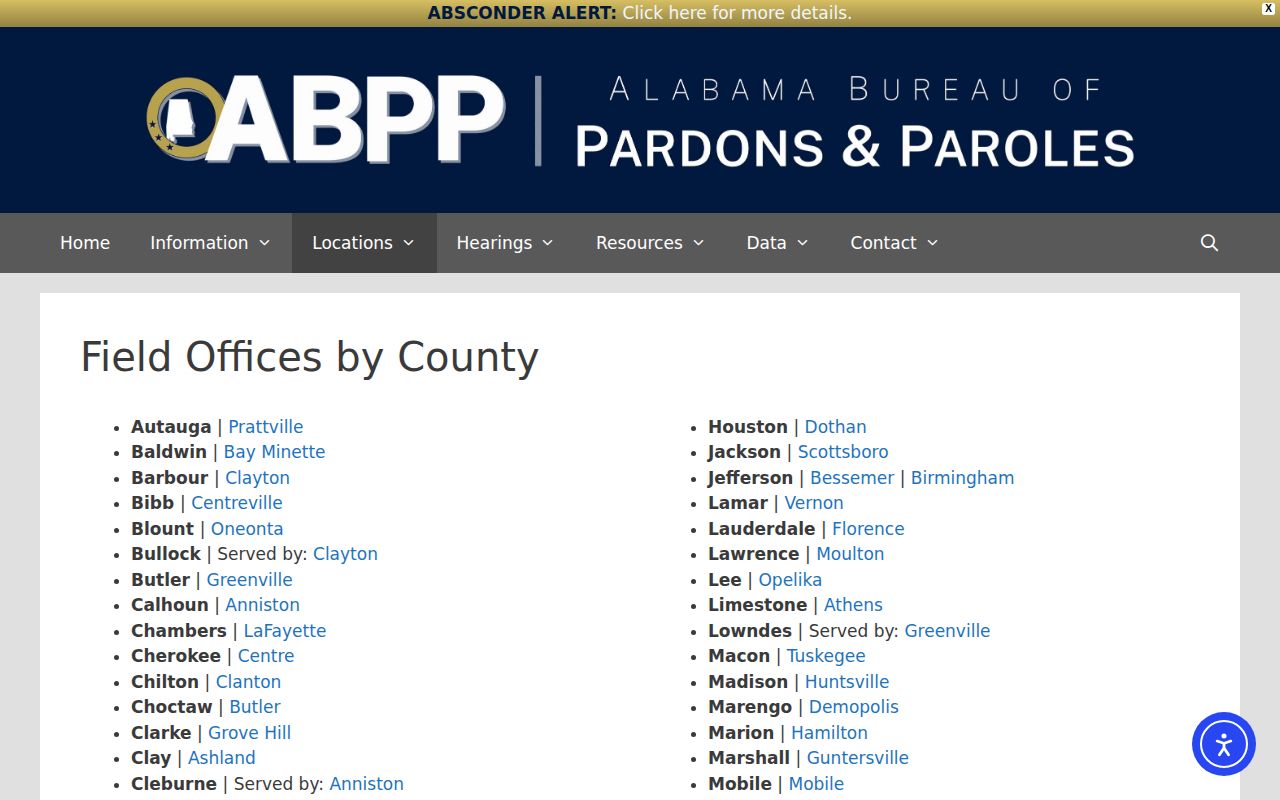
Parole conditions are written under § 15-22-29. After physical release, the person may remain under legal custody until the maximum term expires or a full pardon occurs. Alabama probation and parole records then route through field-office verification, conditions, absconder alerts, and discharge sources.
For a custody-exit date, ask ADOC or the proper records custodian. For the Board vote, use ABPP results and minutes. For ongoing supervision, use the assigned field office. This three-part check prevents a favorable hearing result from being reported as an event that has not yet occurred.