
Alabama Parole and Probation
Parole and probation can both place a person under rules outside a jail or prison. Their legal sources differ. Alabama parole is a conditional early release tied to a prison sentence and a decision by the three-member Alabama Board of Pardons and Paroles. Probation generally follows a court sentence instead of a parole grant. A split sentence can combine a set term of confinement with probation, while mandatory release moves an eligible state prisoner into supervision by statute. Each path creates a different paper trail.
The distinction also changes how release is verified. A Board grant proves that the Board voted for parole, but it does not prove that ADOC has processed a physical release. ABPP must verify the approved home plan and coordinate with the Alabama Department of Corrections. A probation order, by contrast, is found in the sentencing court record. Someone outside prison may still remain in legal custody or under court or Board control. Release from a building is not the same as discharge from a sentence.
| Supervision | How it begins | Best record route |
|---|---|---|
| Parole | The Board grants conditional release from an ADOC sentence. | ABPP result, hearing minutes, field office, and allowable agency records. |
| Probation | A court places the person under supervision through its sentence. | Sentencing order, case docket, and assigned ABPP field office. |
| Split sentence | A court orders confinement followed by probation. | Court judgment, release record, and supervising office. |
| Mandatory release | State law moves an eligible prisoner to supervision before sentence end. | ADOC record, Alabama VNS notice, and ABPP field office. |
- Parole
- Conditional release from prison before the maximum term has run.
- Probation
- Court-ordered supervision that is part of a criminal sentence.
- Absconder
- A supervised person whose whereabouts or reporting status has become a violation issue.
- Discharge
- The official end of the controlling supervision or sentence term.
Verify Alabama Post-Release Supervision
No authoritative statewide public name-based parolee or probationer lookup was found in the official Alabama sources reviewed. The current ADOC inmate search is not a substitute. ADOC limits that public search to people who are currently incarcerated, so a missing name may be consistent with release but says nothing about active supervision. ABPP instead organizes verification through its field offices, Public Information Unit, hearing records, and other records held by the agency.
Begin with the custody layer. A county jail exit may lead to probation, transfer, time served, bond, or another status. An ADOC exit may lead to parole, mandatory release, end of sentence, or a split-sentence probation term. Federal and immigration supervision are outside Alabama's state system. The following sequence keeps those records apart.
- Identify whether the person left a county jail, an ADOC facility, federal custody, or immigration custody.
- Find the sentencing county and review the court docket or order for probation, a split sentence, or later changes.
- For a parole question, check ABPP's scheduled-hearing and decision records using the name and AIS when available.
- Use the ABPP county directory to locate the field office responsible for the supervision area.
- Ask that office or the Public Information Unit for the type of confirmation the agency may release.
- Request the existing supervision or discharge record when an online page does not answer the question.
The statewide release-search path begins with the custody source on Alabama released inmates, then moves to the court or supervision office that owns the next record. This prevents a roster removal from being mistaken for supervision discharge.
Alabama Supervision Uses Field Offices
ABPP Field Operations holds active files and supervises probationers and parolees through 14 districts and more than 60 offices. The correct statewide route is the Bureau's county-to-office directory. Use the county of supervision when it is known, which may not be the county where a prison stands. If the county is unclear, the Public Information Unit is the official Bureau channel for parole information and record questions. It may route the inquiry based on the facts available.
Routing also depends on the document in hand. A parole certificate points to a Board action and ABPP supervision. A sentencing order that says probation points back to the trial court and its assigned office. Mandatory release to supervision is a statutory move from ADOC custody into ABPP supervision, not a parole grant. When two counties appear in the history, use the office directory and ask which supervision county controls the active file rather than assuming it is the county of conviction or the county where the last prison was located.
Alabama Bureau of Pardons and Paroles
Field Operations
Field offices by county
Public Information Unit
The official ABPP field-office directory is shown in the matched capture below.
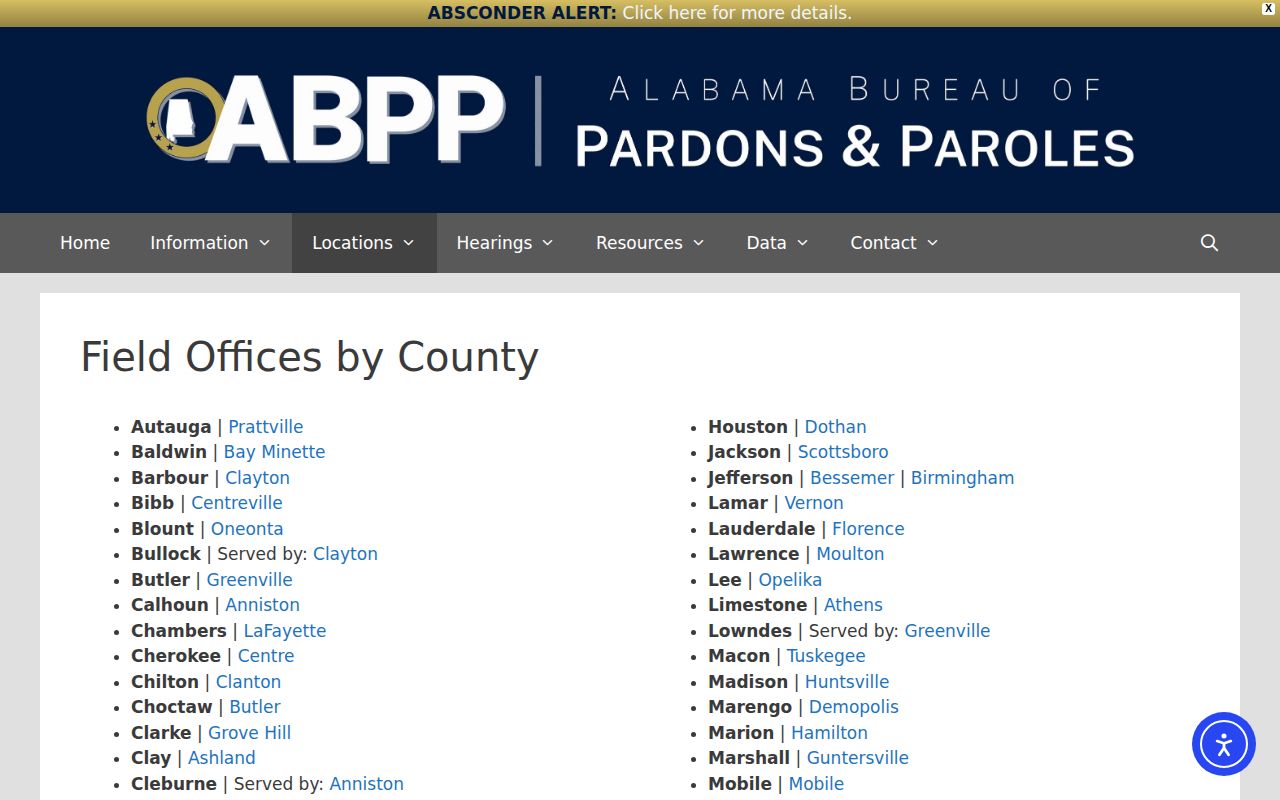
Selecting the right office narrows the inquiry to the staff who hold the active file. It also avoids sending a court-probation question to ADOC, which manages prison custody rather than the field-office supervision record.
Note: County-based routing identifies the responsible office, but it does not make confidential supervision details public.
Alabama Parole Decision Records
ABPP's hearing pages provide one part of the supervision trail. The scheduled-hearings table covers matters expected to come before the Board. The current-year results table then lists hearing date, AIS, name, medical indicator, result, and conviction county. Dated hearing minutes may contain special conditions. These sources are useful for confirming a Board action, but none is a public list of all people now under supervision.
A result may say Granted, Denied, Denied/reset, or Continue. A grant is the decision that can lead to parole. It does not establish the date ADOC released the person. ABPP still verifies a home plan and works with ADOC on release documents. A reset month is also easy to misread. It means the person may be considered for a future docket in that month, not that a new hearing has been placed on a fixed day.
The ABPP current-year results are the source for this decision-table image.
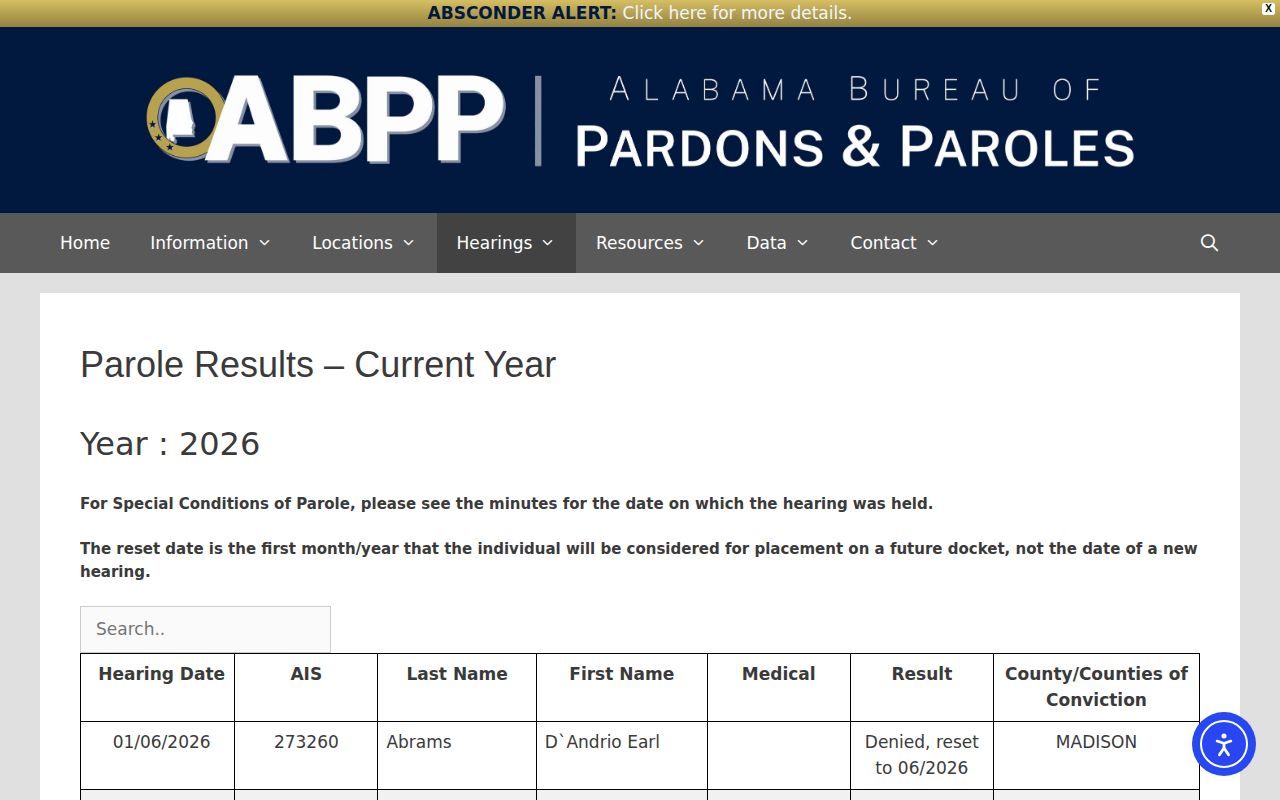
For post-release status, pair a grant with the field office and the actual custody-exit record. The official sources used for Alabama parole hearings and decisions separate schedules, result terms, and dated minutes.
Alabama Probation Court Records
Probation usually begins with the court, not with a Board grant. Alabama court records can support a probation order, split sentence, revocation, amended transcript, or later disposition. The Alabama Administrative Office of Courts identifies Just One Look as on-demand access to a state trial-court case. Subscription Alacourt access is another court channel. These records show the judicial cause and terms reflected on the docket, but they do not certify the exact moment a jail or prison completed release processing.
When the docket shows a split sentence, read the confinement and probation parts separately. The sentence may move from custody to supervision without ending the case. A later revocation entry may return the person to custody. If an amended transcript changes ADOC's data, the court record helps explain the change while ADOC remains the source for prison processing. The assigned field office remains the best route for allowable confirmation of active supervision.
The official Just One Look court portal is pictured in this matched Alabama capture.
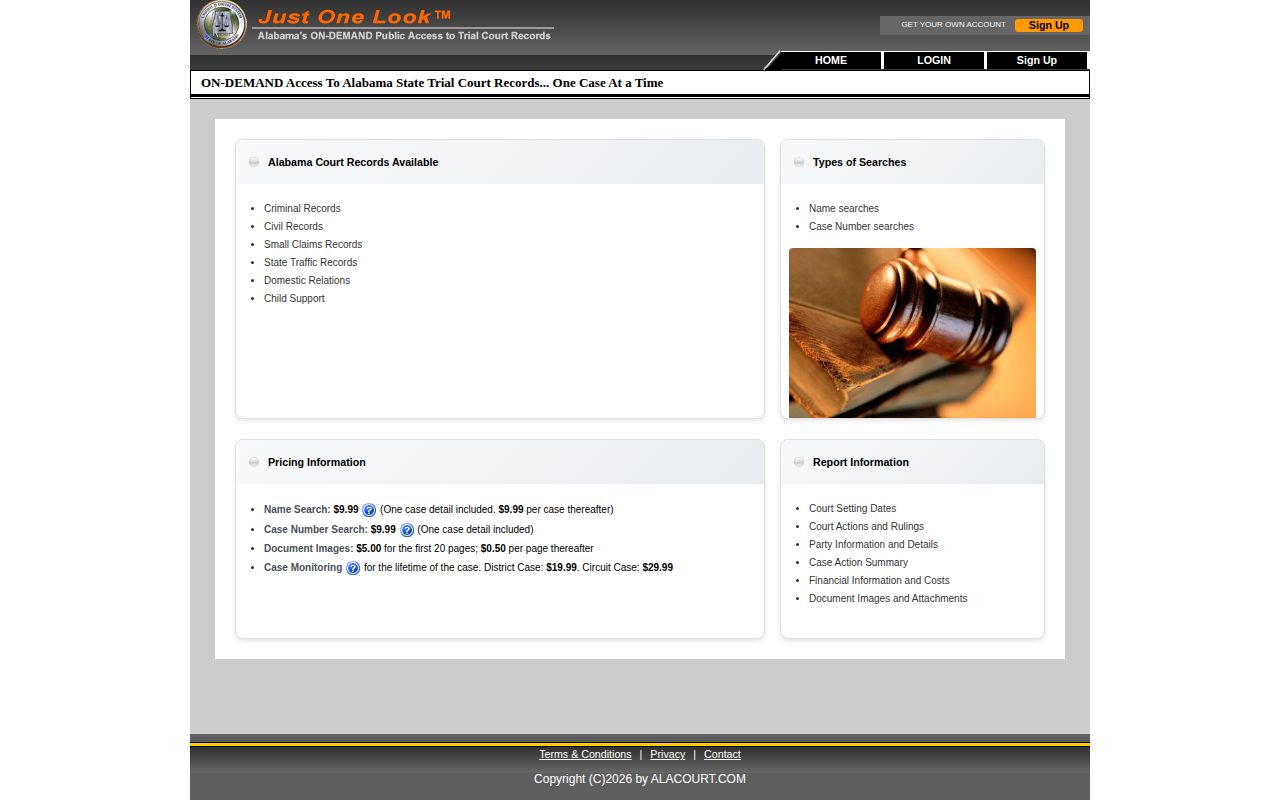
Use the court for the order and the releasing agency for the custody event. Matching those two records is stronger than treating either a roster absence or an isolated docket line as a full account of Alabama probation status.
Alabama Parole Violation Records
Written parole conditions are required by Ala. Code § 15-22-29. Conditions are the rules that govern release. Their exact text belongs in the person's certificate, Board minutes, court order, or supervision papers. Alleged violations follow the process in § 15-22-32, which addresses revocation, reinstatement, and sanctions. An allegation, warrant, or detainer can affect custody without erasing the fact that an earlier release occurred.
ABPP's Absconder Alerts form a special subset. They are not a comprehensive Alabama probation and parole roster. A name absent from the alert page may still belong to someone under supervision, someone whose case is handled through another process, or someone whose supervision has ended. The page routes whereabouts information to law enforcement and directs other questions to ABPP or local authorities.
Alabama VNS can send notices about ADOC-sentenced people and several custody or status events. The Alabama Victim Notification System is shown below as the official state notification source.
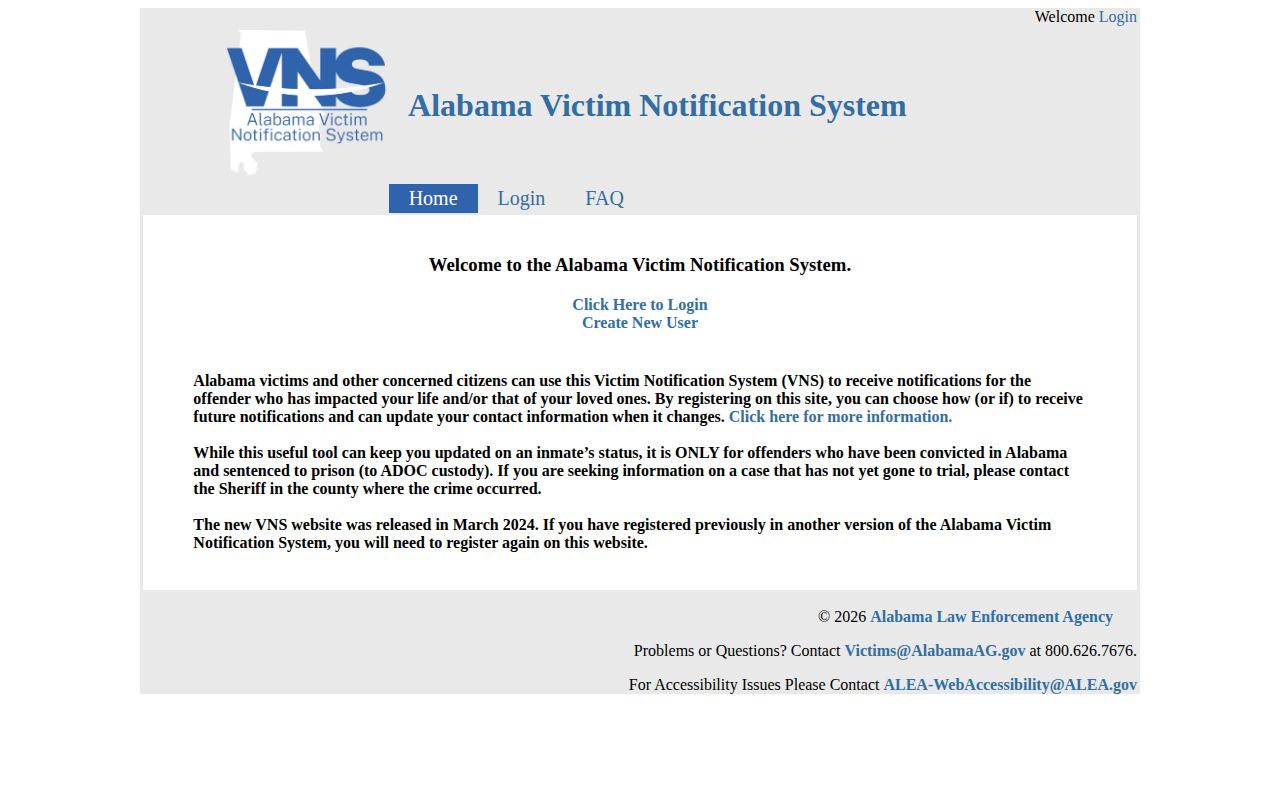
VNS has a firm scope limit. It covers people convicted in Alabama and sentenced to ADOC prison, not every county pretrial detainee or probation case. For a county-only case, follow the sheriff, court, and assigned field office. A no-result must be routed to the right agency rather than labeled a discharge.
Note: A violation record may change present custody while the original release date remains a separate historical fact.
Alabama Supervision and Discharge
Supervision ends only through the authority controlling it. For probation, that is generally the court and supervising office. For parole, the Board, Bureau, and governing sentence records matter. No public ABPP discharge-certificate name search was identified. If a formal end date is needed, ask the supervising field office or the proper records custodian for the existing confirmation that can lawfully be released.
Alabama law draws a sharp line between physical release and final discharge. Under § 15-22-26, parole is not granted merely as a reward for good conduct. Subsection (b) also provides that a parolee remains in the legal custody of the prison warden until the maximum term expires or a full pardon occurs. Mandatory release to supervision likewise moves an eligible person out of prison under supervision rather than ending every legal restraint.
Completion should therefore be tied to a record, not an inference. A person may stop appearing in a current ADOC search because that search contains only incarcerated people. The same person may never have appeared in Absconder Alerts, which cover only a special alert subset. Neither absence establishes satisfactory completion. A court entry, field-office confirmation, or existing discharge document is the sound source. If a later arrest or violation is present, keep it separate from the earlier release and ask whether supervision was revoked, reinstated, sanctioned, modified, or closed.
A specific records request works better than a broad demand. Name the person, the type of supervision, the office or court, and a narrow date range. Ask for an existing order, certificate, decision, or discharge record rather than asking the agency to create a new account. Alabama's public-record law still allows exemptions, redaction, fees, and agency review. The final proof should come from the office that created or closed the supervision record.